
'Higher interest rates make gold less attractive as it doesn't generate yield.' 'However, with rates set to fall, the tables are turning for gold.'

According to World Gold Council (WGC), gold jewellery demand in India, the world's largest consumer, touched record 662.1 tonnes in 2014.

After remaining in the positive zone for three months, India's exports contracted 1.2 per cent to $33.98 billion in July, while the trade deficit widened to $23.5 billion.

It may touch Rs 19,800 crore.

Gold jewellery exports may decline by about 50 per cent in this financial year from last year after government restrictions reduced the availability of raw material, Gitanjali Gems Chairman and Managing Director Mehul Choksi said.

Gold sales were reported at 40 tonnes last year; this might have been surpassed this year.

The second day of pre-Diwali Dhanteras witnessed a tepid response from shoppers on Friday as gold and silver sales have likely to be fallen by up to 35 per cent year-on-year due to high prices and COVID-19 induced financial distress, although consumers moved to online buying to make most of the festival, jewellers said. The buying was heavily restricted to light weight jewellery, coins and precious stones due to lower purchasing power and high gold rates, they said. Due to the fear of coronavirus infection, many customers who had booked in advance were taking delivery of wedding orders on Friday, while some were seen buying safely through online brands like Tanishq and Melorra.

Pre-Diwali Dhanteras sales of gold and silver witnessed a tepid response from consumers on Thursday on account of high prices of the precious metals and sluggish demand due to COVID-19 induced economic hardship, according to jewellers and industry experts. However, jewellers are expecting maximum footfalls on Friday as Dhanteras -- considered the most auspicious day in Hindu calendar for buying items, ranging from precious metals like gold and silver to utensils -- is being celebrated for two days this year.

For the second straight year, the gems and jewellery industry is set for almost a washout of business on Akshaya Tritiya as only about 10 per cent of pre-Covid sales of 2019 are expected on Friday amid the raging pandemic sapping footfalls and purchasing power of people.

The gems and jewellery industry is staring at a sales washout on Akshaya Tritiya for the second consecutive year as most of the states are under lockdowns due to the raging second wave of the COVID-19 pandemic which has led to negative consumer sentiment, say industry leaders. Akshaya Tritiya, considered as an auspicious day for buying gold and jewellery, falls on May 14 this year. India is the worst-hit among all nations with the second wave of the pandemic, which has been killing more than 3,500 daily and infecting close to 4 lakhs daily for weeks. The massive caseload has nearly paralysed the medical infrastructure.

Most consumers are going for token buying of lesser value and are waiting for price correction for purchase of wedding jewellery.

'I found it unbelievable that L&T said 45,000 jobs were waiting to be filled because of unavailability of suitable skillsets.' 'So, when the Opposition sweepingly says there are no jobs, I'm sorry... I'm not saying it's raining jobs, but there are jobs. The (skill) gap has to be bridged.'

Mandatory hallmarking of gold would be a positive in making the gold market more organised. Mandatory hallmarking would come into effect from January 15, 2020, with a one-year transition period for trade to sell existing inventories. Experts also expect more policy measures next year to bring in more transparency in terms of gold as an asset class.

Subdued demand from developed countries and blocs like the US and EU is impacting exports of key sectors including engineering, gems and jewellery and may have implications on India's exports in case the global situation does not improve in coming months. Global inflation, Russia-Ukraine war, simmering China-Taiwan crisis and supply disruptions are hurting economic growth worldwide, leading to poor demand, experts say. The world merchandise trade volume is expected to grow 3 per cent in 2022 against the earlier forecast of 4.7 per cent, mainly due to the ongoing war between Russia and Ukraine, according to the World Trade Organization forecast, released in April.

Exporters on Thursday demanded fiscal incentives, tweaking in customs duties on certain products and credit at affordable rates in the forthcoming Budget to boost exports and create jobs. In a pre-budget virtual meeting with Finance Minister Nirmala Sitharaman, the Federation of Indian Export Organisations (FIEO) said the depreciation of the rupee against the US dollar is affecting exports' competitiveness and the sector requires more support. "Creation of employment is the biggest challenge faced by the country...We would urge the government to provide fiscal support to units which provide additional employment in the export sector," the exporter's body said.

Confidence had ebbed in the last few years due to default by some errant domestic retailers and exporters. Moreover, many jewellers are believed to have diverted the fund collected through monthly deposit schemes to pay 'mark-to-market' margins on various loans.

While the government has not made the report public, sources said the panel had recommended a sharp cut in all taxes on the gold business, including import duty and goods and services tax which amounts to over 13%.

Some antique jewellery is displayed in a couple of museums in the world.
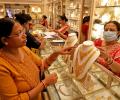
'When the gold price rises rapidly, India's physical gold market remains on standby.'
Gold, which lost its sheen to some extent in the second half of 2021, is likely to regain the glitter in the New Year and cross the Rs 55,000-per-10-grams level amid pandemic woes, inflation worries and stronger US dollar. After a stellar run up in 2020 when the yellow metal touched a record high of Rs 56,200 on the MCX in August, the prices are near Rs 48,000 per 10 grams now. This is roughly 14 per cent lower from the all-time highs and 4 per cent lesser compared to January 2021 levels.

Diamond industry expects revenues to drop by 20-25% in the current financial year.

India's gold demand recovered during the January-March period to witness a growth of 37 per cent at 140 tonne compared to the same quarter of 2020, due to ease of COVID-related restrictions, pent up demand and softening of prices of the yellow metal, according to the World Gold Council (WGC). The overall gold demand stood at 102 tonne during the first quarter of 2020, as per WGC data. Gold demand in value terms increased by 57 per cent during the first quarter of this calendar year to Rs 58,800 crore compared to Rs 37,580 crore in the corresponding period of 2020.
The options include involving jewellers as collection centres, addressing of issues that banks have been facing and using domestically available gold for giving metal loans to jewellers for domestic sales.
Meanwhile, retail jewellery sales in India have declined by 50 per cent since gold price started its uptrend nearly two weeks. Buyers deferred their fresh purchase amid expectations of a correction in gold prices from the current high level.


Round-tipping creates the opportunity for exporters to source funds at a much cheaper cost, which they divert to some other business.
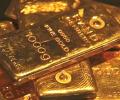
However, in 2020, gold demand in India -- the world's second biggest consumer after China -- could increase to 700-800 tonnes on hopes of increased acceptance of high price level and likely economic reforms boosting consumer confidence, World Gold Council said.
Post global slowdown scenario, Surat's diamond industry is gaining momentum in demand from the domestic, international and emerging markets like China, industry sources said today.
Surat Diamond Association, the apex body of diamond industry in Ahmedabad, has said there should be a special force for the security of diamond industry in the wake of serial blasts in Mumbai.

Orders for the festive season abroad begin from next month.
Blocked working capital worth Rs 1,500 crore, in the almost-defunct job work diamond polishing units, is expected to be released even as diamantaires will issue fresh orders to such units following the GST relief.
Imports also fell for the eighth consecutive months, down 0.75 per cent to $41.14 billion in January, widening the trade deficit to a seven-month high of $15.17 billion.

Imports increased by 4.5 per cent, the highest growth in the last six months as crude oil and gold shipments shot up in the month.

Concerned over decline in gold exports from SEZs following ban on its trading, the government has allowed units in these zones to export gold items after a minimum value addition of 3 per cent.

Gold is currently ruling at Rs 30,050 per 10 grams.

Prime Minister's Economic Advisory Council Chairman C Rangarajan dashes bullion firms' duty cut hopes.

Out of 30 key export sectors, as many as 22 showed negative growth in September.

At nine-month high, current prices attractive; consumers want to cash in before a correction

The RBI on Wednesday eased gold import norms by allowing select trading houses, in addition to already permitted banks, to procure the precious metal to boost exports.

Going ahead, the likely implementation of the goods and services tax bill in July and how the monsoons play out will have a bearing on India's demand for gold and gold jewellery
 © 2026 Rediff.com - Advertise with us - Disclaimer - Privacy Policy - Sitemap - Feedback - About us - Terms of use - Grievances